Pension Lump Sum Tax Calculator
Calculate exactly how much tax you'll pay on your pension withdrawal. Work out your 25% tax-free cash and income tax liability on taxable amounts with our 2025/26 tax year calculator.
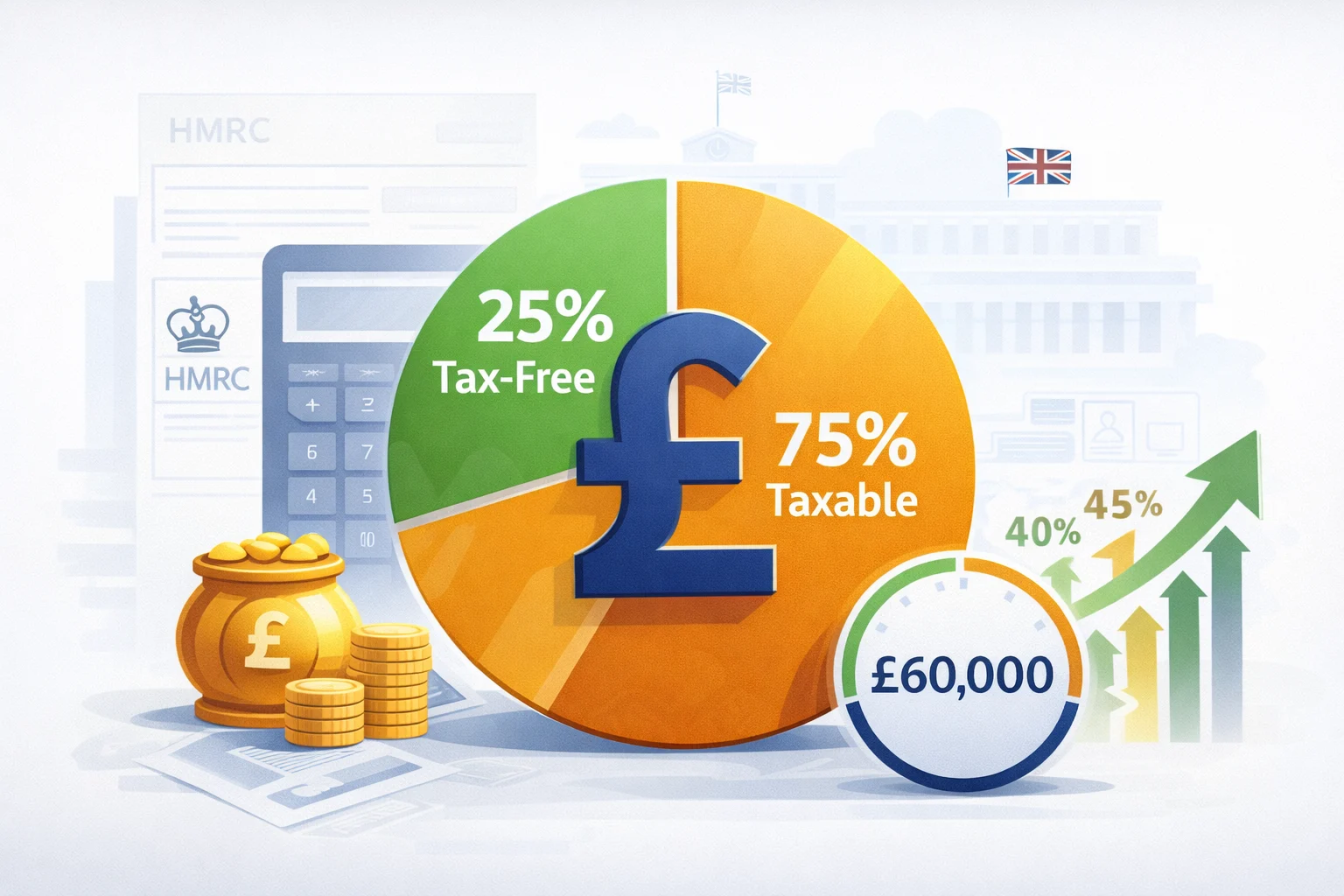
Understand Your Pension Withdrawal Tax
Taking money from your pension is a significant financial decision. Our calculator helps you understand exactly how much tax you'll pay, ensuring you make informed choices about your retirement income.
£0
25% tax-free cash
£0
Subject to income tax
£0
Income tax on withdrawal
£0
After deducting income tax
Income Tax Breakdown
- Personal Allowance Used: £0
- Basic Rate Tax (20%): £0
- Higher Rate Tax (40%): £0
- Additional Rate Tax (45%): £0
- Effective Tax Rate: 0%
Income Summary
- Other Annual Income: £0
- Taxable Pension Withdrawal: £0
- Total Taxable Income: £0
- Tax Region: England, Wales & NI
- Emergency Tax Deducted: £0
- Actual Tax Due: £0
- Potential Overpayment: £0
How to Reclaim Overpaid Tax
- Complete HMRC form P55 (if still receiving income)
- Complete HMRC form P53Z (if you've stopped work)
- Wait for automatic refund at end of tax year
- Usually processed within 30 days
Since this is a flexible pension withdrawal, the Money Purchase Annual Allowance (MPAA) will apply to future pension contributions:
- Annual contribution limit reduced from £60,000 to £10,000
- Applies to all your money purchase pensions
- Excess contributions taxed at your marginal rate
- Cannot be reversed once triggered
Taking your 25% tax-free lump sum only doesn't trigger the MPAA if you don't touch the remaining 75%. Your annual allowance remains £60,000.
- Consider spreading withdrawals across tax years to stay in lower tax bands
- Take advantage of your personal allowance each year if you have no other income
- Coordinate pension withdrawals with state pension timing
- Consider taking 25% tax-free first and leaving the rest invested
- Be aware of how pension income affects means-tested benefits
- Consult a financial advisor for personalized tax planning
About This Calculation
This calculation is based on 2025/26 tax year rates and thresholds. Actual tax may vary depending on your specific circumstances, tax code, and any changes to tax legislation. For complex situations or personalized advice, consult a qualified financial advisor or contact HMRC directly.
This calculator uses income tax rates from GOV.UK official tax rates and pension rules from MoneyHelper pension tax guidance.
Understanding Pension Lump Sum Tax
25% Tax-Free Cash
When you access your pension from age 55 (rising to 57 in 2028), you can usually take up to 25% of your pot completely tax-free. This is known as your Pension Commencement Lump Sum (PCLS).
- Available from age 55 (57 from April 2028)
- Maximum 25% of total pension pot value
- Can be taken as single lump sum or in stages
- Not counted as income for tax purposes
- Doesn't affect your personal allowance
Income Tax on Withdrawals
The remaining 75% of your pension is treated as taxable income. When you withdraw it, it's added to your other income and taxed at your marginal rate.
- Basic rate (20%): Income £12,571-£50,270
- Higher rate (40%): Income £50,271-£125,140
- Additional rate (45%): Income over £125,140
- Different rates apply in Scotland
- Large withdrawals can push you into higher bands
Emergency Tax & Reclaims
Your pension provider may deduct emergency tax on your first withdrawal if they don't have your correct tax code. This is usually much higher than necessary.
- Emergency tax assumes you'll withdraw the same amount monthly
- Often results in significant overpayment
- Reclaim using HMRC form P55 or P53Z
- Can take 30 days to process refund
- Automatic refund at end of tax year if not claimed
England, Wales & Northern Ireland
| Income Band | Tax Rate |
|---|---|
| £0 - £12,570 | 0% (Personal Allowance) |
| £12,571 - £50,270 | 20% (Basic Rate) |
| £50,271 - £125,140 | 40% (Higher Rate) |
| Over £125,140 | 45% (Additional Rate) |
Scotland
| Income Band | Tax Rate |
|---|---|
| £0 - £12,570 | 0% (Personal Allowance) |
| £12,571 - £14,876 | 19% (Starter Rate) |
| £14,877 - £26,561 | 20% (Basic Rate) |
| £26,562 - £43,662 | 21% (Intermediate Rate) |
| £43,663 - £75,000 | 42% (Higher Rate) |
| £75,001 - £125,140 | 45% (Advanced Rate) |
| Over £125,140 | 48% (Top Rate) |
Timing Your Withdrawals
Large one-off withdrawals can push you into higher tax bands, resulting in substantial tax bills. Consider spreading withdrawals across multiple tax years to stay within lower rate bands and maximize your personal allowance each year.
Money Purchase Annual Allowance
Once you access your pension flexibly (taking more than your 25% tax-free cash), the MPAA kicks in, reducing your annual pension contribution limit from £60,000 to just £10,000. This can't be reversed, so plan carefully.
Emergency Tax Refunds
If emergency tax is deducted from your first withdrawal, you can reclaim it through HMRC forms P55 (if still working) or P53Z (if you've stopped). Refunds typically process within 30 days, but you can also wait for an automatic refund at the tax year end.
Impact on Benefits
Pension withdrawals don't affect your State Pension, but they may impact means-tested benefits like Pension Credit, Housing Benefit, or Council Tax Support. Large lump sums can also push your savings above benefit thresholds. Seek benefits advice before withdrawing.
You can usually take up to 25% of your pension pot as a tax-free lump sum, known as the Pension Commencement Lump Sum (PCLS). This applies to most defined contribution pensions and can be accessed from age 55 (rising to 57 in 2028).
Example:
- Pension pot: £100,000
- Tax-free cash: £25,000 (25%)
- Remaining taxable amount: £75,000
You can take your 25% tax-free cash as a single lump sum or spread it across multiple withdrawals. If using UFPLS (Uncrystallised Funds Pension Lump Sum), each withdrawal contains 25% tax-free cash and 75% taxable income.
The tax-free portion doesn't count toward your annual income and won't affect your personal allowance or push you into higher tax bands. For more information on tax relief on contributions, see our Pension Tax Relief Calculator.
The taxable portion of your pension withdrawal (usually the 75% after taking your tax-free cash) is added to your other income for the tax year and taxed at your marginal rate.
2025/26 Tax Rates (England, Wales & Northern Ireland):
- Personal Allowance: £12,570 at 0%
- Basic Rate: £12,571-£50,270 at 20%
- Higher Rate: £50,271-£125,140 at 40%
- Additional Rate: Over £125,140 at 45%
Example Calculation:
If you have no other income and withdraw £40,000 (with £10,000 tax-free and £30,000 taxable):
- Tax-free cash: £10,000 (no tax)
- First £12,570 of taxable: £0 (personal allowance)
- Remaining £17,430: £3,486 tax at 20%
- Total tax: £3,486
- Amount received: £36,514
Scotland has different tax bands with additional rates. Use our calculator above to work out your specific tax liability based on your circumstances.
If your pension provider doesn't have your correct tax code when you make your first withdrawal, they're required to use an emergency tax code. This often results in significantly more tax being deducted than you actually owe.
How Emergency Tax Works:
- The provider assumes you'll withdraw the same amount every month for the year
- They calculate tax as if this is your monthly income
- This can push you into much higher tax bands than your actual annual income warrants
- The tax code used is typically 1257L M1 or W1
How to Reclaim Overpaid Tax:
- Form P55: Use if you're still receiving income from employment or another pension
- Form P53Z: Use if you've stopped working and won't receive taxable income for the rest of the tax year
- Wait for automatic refund: HMRC will automatically refund overpaid tax after the end of the tax year
Refunds typically process within 30 days of submitting your claim. Download the forms from GOV.UK.
Avoiding Emergency Tax:
Ensure your pension provider has your correct tax code before making withdrawals. Contact HMRC on 0300 200 3300 to check your tax code if unsure.
Yes, you have flexibility in how you take your 25% tax-free cash, depending on which withdrawal method you choose.
Option 1: Take Full 25% Upfront
- Take your entire 25% tax-free entitlement as a single lump sum
- Leave the remaining 75% invested
- Draw income from the 75% later (taxable)
- Doesn't trigger MPAA if you don't touch the 75%
Option 2: UFPLS (Multiple Withdrawals)
- Each withdrawal contains 25% tax-free cash and 75% taxable income
- Can make multiple withdrawals over time
- Flexibility to withdraw only what you need
- Triggers MPAA on first withdrawal
Option 3: Pension Drawdown
- Move pension into drawdown arrangement
- Take 25% tax-free from each portion you move into drawdown
- Greater control over investment and withdrawals
- Triggers MPAA when you start taking income
Important Consideration:
The total tax-free cash you can take is always limited to 25% of your total pension pot value. Once you've taken your full 25% entitlement from a particular pension, any further withdrawals from that pension will be fully taxable.
For information on how different pension types work, see our guides on Private Pensions and Workplace Pensions.
State Pension:
Taking money from your private or workplace pension has no effect on your State Pension entitlement. Your State Pension is based solely on your National Insurance contribution record. Learn more about State Pension on our State Pension Calculator.
Means-Tested Benefits:
Pension withdrawals can affect means-tested benefits in two ways:
1. As Income:
- Regular pension income counts toward benefit calculations
- May reduce Pension Credit, Housing Benefit, or Council Tax Support
- Even tax-free lump sums can affect Universal Credit in the month received
2. As Savings/Capital:
- Lump sums that increase your savings can affect benefit entitlement
- Savings over £6,000 can reduce Pension Credit
- Savings over £16,000 can disqualify you from some benefits
- Pension pots you haven't accessed don't count as savings
Benefits That May Be Affected:
- Pension Credit
- Housing Benefit
- Council Tax Support
- Universal Credit
- NHS prescription charge exemptions
Benefits NOT Affected:
- State Pension
- Attendance Allowance
- Personal Independence Payment (PIP)
- Carer's Allowance (unless you're the recipient of care)
Important: If you receive means-tested benefits, seek advice before taking pension withdrawals. Contact MoneyHelper on 0800 011 3797 or visit your local Citizens Advice for free, impartial guidance.
The Department for Work and Pensions (DWP) provides information on how pension income affects benefits at GOV.UK Pension Credit.
The Money Purchase Annual Allowance (MPAA) is a reduced limit on how much you can contribute to your pension with tax relief after you've flexibly accessed your pension benefits.
Standard Annual Allowance vs MPAA:
- Standard Annual Allowance: £60,000 per year
- Money Purchase Annual Allowance: £10,000 per year
When MPAA Is Triggered:
The MPAA applies if you:
- Take income from a flexi-access drawdown fund
- Take an Uncrystallised Funds Pension Lump Sum (UFPLS)
- Buy a flexible annuity and use flexible withdrawals
- Take more than your 25% tax-free cash and access the taxable portion
When MPAA Is NOT Triggered:
You can avoid triggering the MPAA if you:
- Only take your 25% tax-free lump sum and don't touch the remaining 75%
- Buy a standard (non-flexible) lifetime annuity
- Take a small pot lump sum (pots under £10,000)
- Receive serious ill-health lump sum
Impact of MPAA:
- Applies to ALL your money purchase pensions, not just the one you accessed
- Contributions above £10,000 per year don't receive tax relief
- Excess contributions are taxed at your marginal rate
- Cannot be reversed once triggered
- Employer contributions count toward the £10,000 limit
Example:
Sarah, age 58, takes £20,000 from her pension using UFPLS (£5,000 tax-free, £15,000 taxable). This triggers the MPAA. She continues working and wants to contribute to her pension:
- Before MPAA: Could contribute up to £60,000 per year with tax relief
- After MPAA: Can only contribute £10,000 per year with tax relief
- Any contributions above £10,000 are subject to tax charges
Planning Tip: If you're still working and plan to make significant pension contributions, consider delaying flexible pension access or only taking your 25% tax-free cash without touching the remainder. Use our Pension Tax Relief Calculator to see how contributions affect your tax position.
Make Informed Pension Withdrawal Decisions
Understanding the tax implications of pension withdrawals is crucial for effective retirement planning. Use our calculators to explore different scenarios and optimize your tax position.
For personalized financial advice, consider consulting a regulated financial advisor. Find one at Unbiased.co.uk